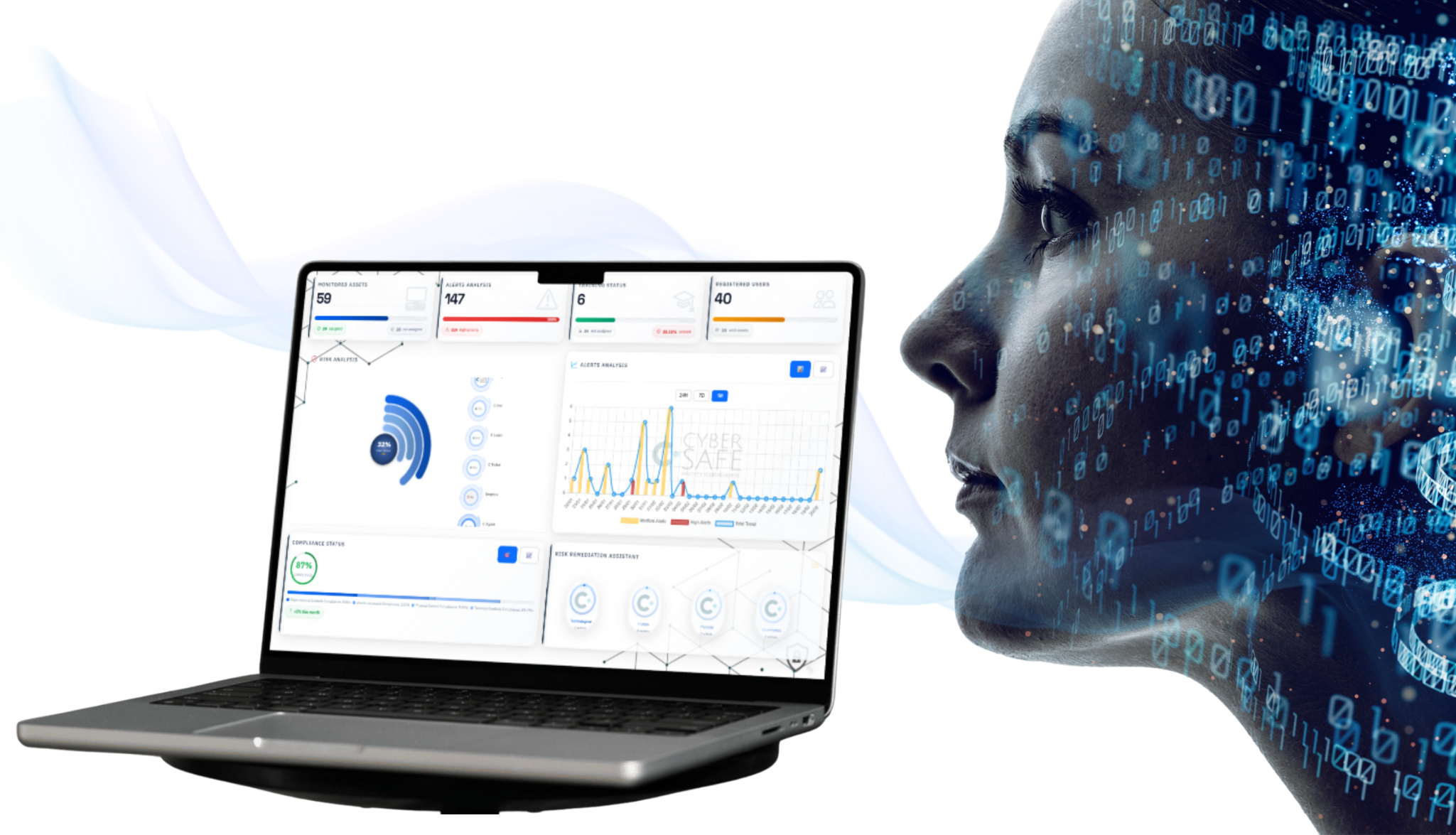
CCyberSafe is designed for a concrete need: governing cybersecurity and compliance over time.
Many companies still operate with documents, non-integrated tools, and periodic checks, as long as external pressure remains manageable. When risks, requests, and regulations become continuous, a stable and traceable operational model becomes necessary.
In many contexts, cybersecurity and compliance are managed pragmatically: distributed documents, case-by-case decisions, and checks prepared only when requested. This can work for a long time, as long as the external environment remains stable.
In recent years, cyber risks have become continuous, regulations stricter, and customers and partners demand greater guarantees. It becomes necessary to demonstrate decisions and controls over time. At that point, even stable organizations begin to struggle.
When external pressure increases, there is a need to coordinate tools, people, and responsibilities with a stable operational model. This evolution often repeats itself across different sectors.
The point is not just formal compliance. It is about maintaining control, traceability, and operational priorities over time, even as the context changes.
Unusual or inconsistent movements with the customer's historical profile, which may indicate fraudulent operations or suspicious activity.
Access attempts from unusual IPs, abnormal hours, or devices never previously registered on the user profile.
Clear changes from the subject's usual behavior, detectable through longitudinal profile analysis.
Operations that by nature, counterparty, or jurisdiction fall under the categories monitored by AML/CFT regulations.
Inconsistencies in documents submitted by the customer during onboarding or file update.
Automatically generated reports by the system in response to thresholds or triggers defined by current regulations.
CCyberSafe is activated from the very first contact to ensure adequate customer verification before starting any relationship.
Systematic update of customer files according to regulatory timelines and assigned risk level.
Immediate activation of in-depth analysis when transactions deviating from expected behavior are detected.
Support in producing the required documentation and demonstrating the adequacy of anti-money laundering controls.
Automatic re-evaluation of the risk profile upon structural changes in the customer's corporate structure.
Secure and tracked management of internal reports, with support for analysis and case documentation.
Entities subject to AML/KYC regulations that need to maintain constant oversight of their customers and demonstrate the adequacy of controls.
Professionals required to conduct adequate customer verification before providing at-risk professional services.
Banks and financial intermediaries with high volumes of customers and transactions to monitor continuously.
Companies that want to integrate digital fraud prevention with compliance and internal control processes.
Asset managers, SIMs, and family offices needing to profile customers according to MiFID II and anti-money laundering regulations.
Companies that need to monitor anomalous internal behaviors related to employees with access to sensitive data or critical resources.