This page describes the software structure of CCyberSafe and the role of its operational components within the architecture.
The platform is designed as an integrated system where configuration, evidence collection, risk measurement, and activity management share the same data model.
Every piece of information collected can fuel measurements, generate actions, and update the overall status.
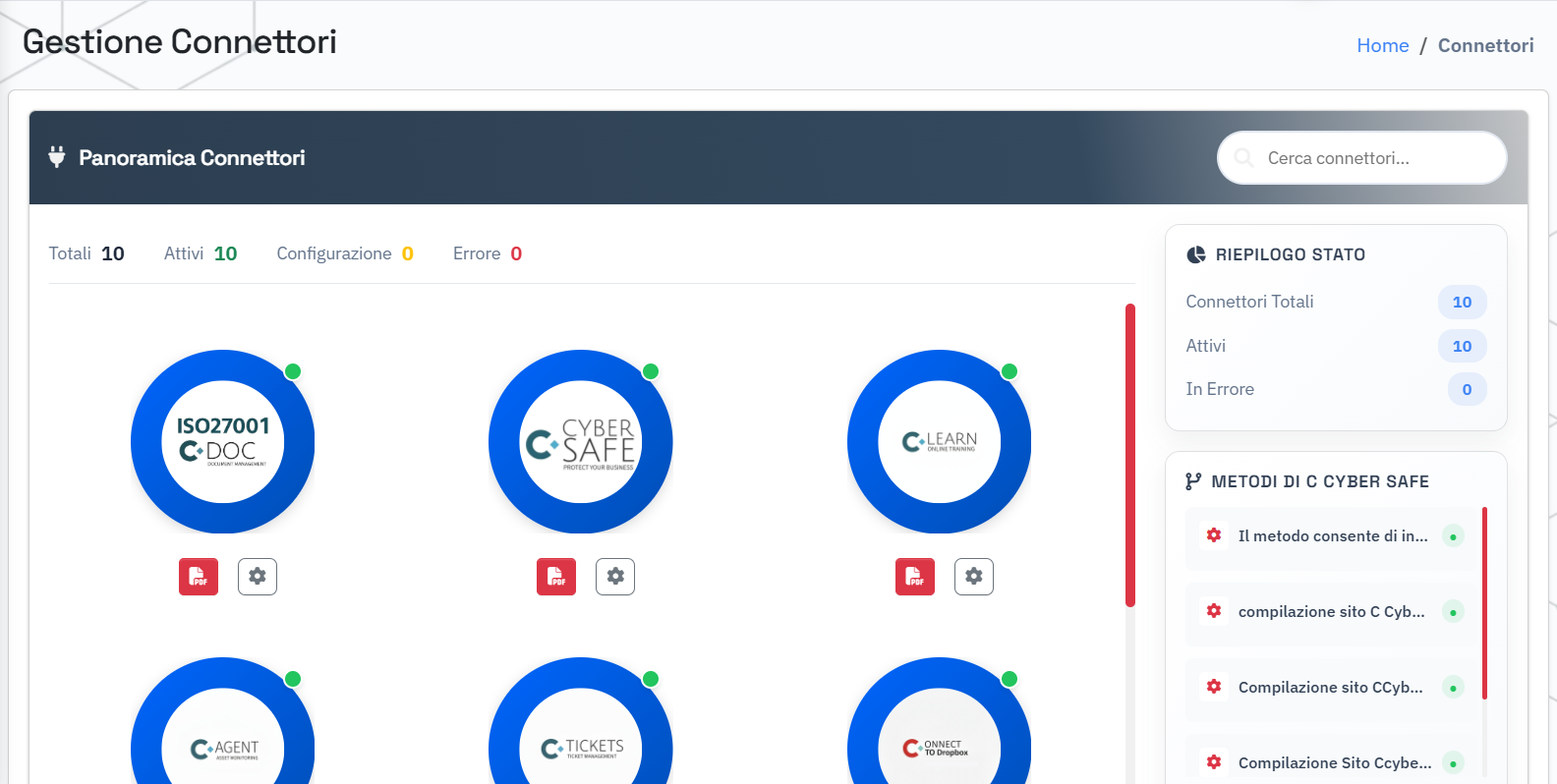
CCyberSafe's architecture is organized into operational components covering configuration, evidence collection, measurement, and task management. Each component performs a specific function but operates on the same data model, ensuring measures, deviations, and actions remain consistent over time.
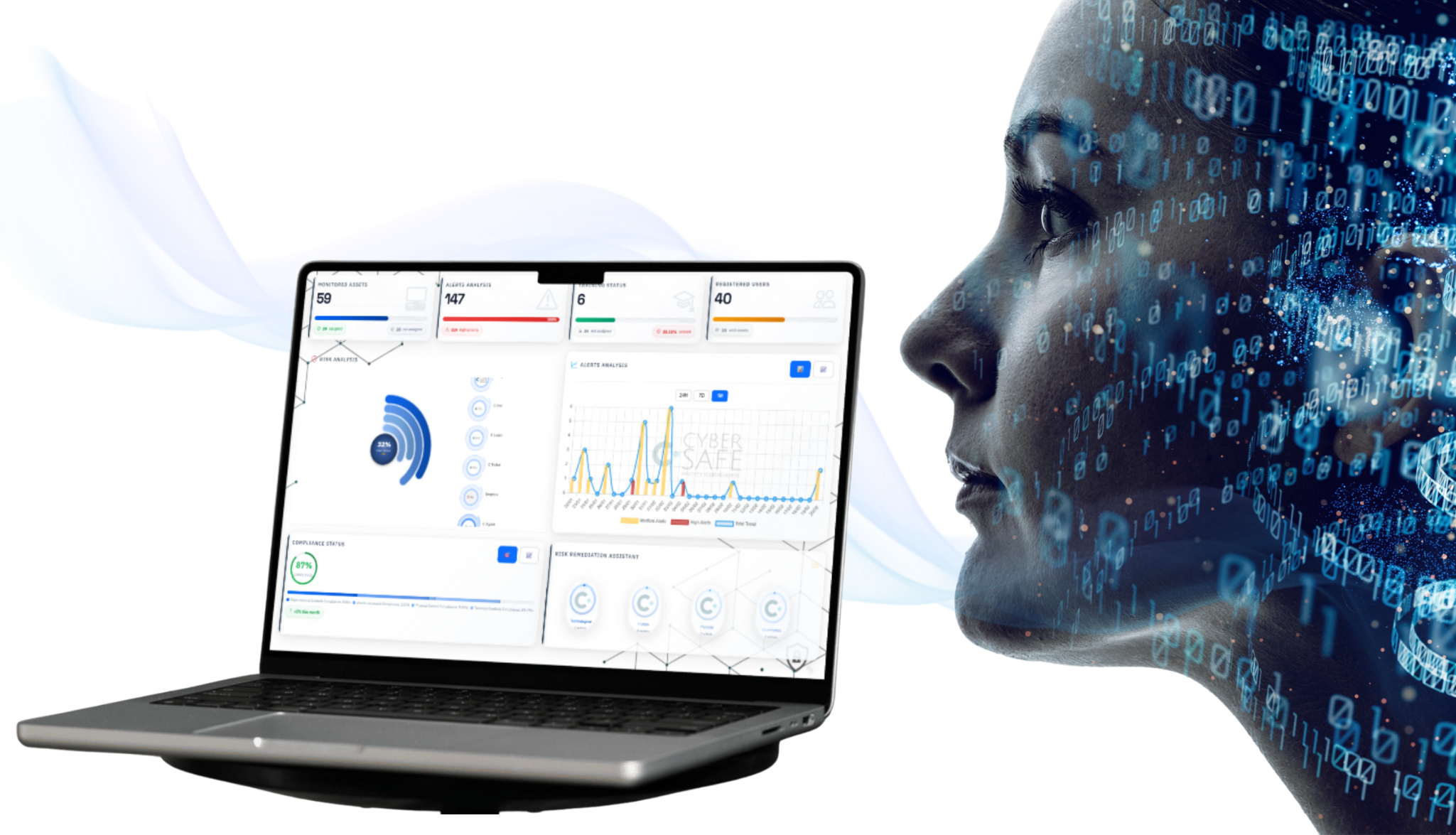
The dashboard makes the difference between expected configuration and real status visible: risk level, control coverage, deviations, and operational priorities. It is the continuous checkpoint between baseline and operational reality.
The risk analysis module allows for structuring and updating the corporate risk model over time. Defined criteria contribute to the baseline and influence the evaluation of effective risk during monitoring.
Orderly preservation of evidence and measures collected from monitored processes. KPIs and metrics become searchable over time, with a history useful for verification and decisions.
Repository for policies, procedures, and materials produced by the platform: versions, responsibilities, approvals, and rapid consultation. Supports orderly management and document availability when needed.
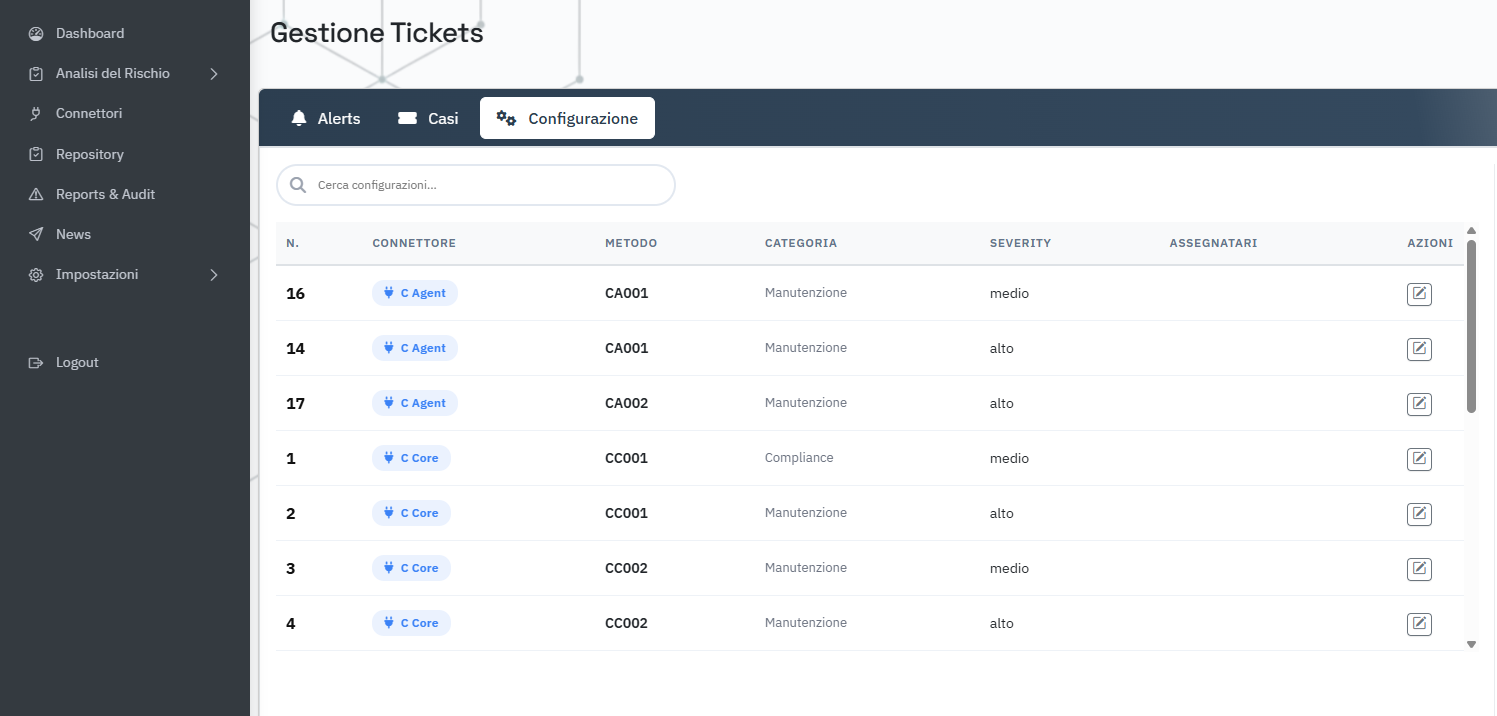
Tools for observing deviations from the baseline and managing remediation. Supports the link between evidence, criticalities, and interventions, with activity traceability.
Operational management of actions: owner assignment, deadlines, status, and history. Activities are followed in the same workspace to avoid duplication and ensure continuity.
This section describes the integration infrastructure of the CCyberSafe platform, focusing on the transition from documentary compliance to dynamic, data-driven verification.
To guarantee the objectivity of risk assessment by minimizing operational burden and ensuring that the security posture is supported by verifiable technical evidence.
Continuous monitoring generates signals, variations, and deviations from expected configuration. The workflow module transforms these deviations into traced operational actions.
In this way, risk does not remain a theoretical indicator but translates into concrete and verifiable activities.
The system allows you to keep open actions, priorities, and backlogs under control, verify compliance with deadlines and intervention times, and maintain a complete history of interventions and decisions. Each closed action contributes to the stability of real risk and real compliance over time.
Automations allow for automatic ticket generation upon event occurrence, notification of owners in case of delays, and alignment between technical monitoring and organizational governance. The result is not only operational efficiency but control continuity. Risk does not remain a theoretical indicator; it becomes an assigned, monitored, and verifiable activity.